Strict vs Kipping Pull-Ups: What CrossFit Athletes Need to Know
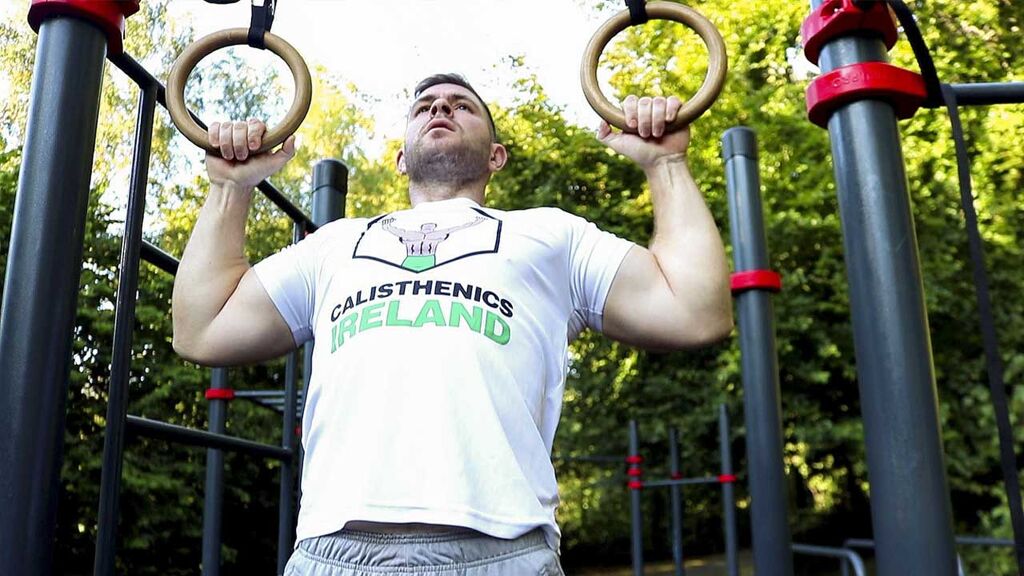
Pull-ups are programmed frequently in CrossFit training. They appear in conditioning workouts, gymnastics progressions, and competitive settings. Most athletes are eventually exposed to both strict and kipping variations.
This often creates confusion.
Some believe strict pull-ups are the only correct version and that kipping is simply a shortcut. Others assume that because kipping is used in competition, strict strength becomes less important once the movement is unlocked.
The reality is more practical. Strict and kipping pull-ups serve different purposes. They develop different qualities. Long-term performance depends less on choosing one over the other and more on understanding how they work together.
The role of the strict pull-up
A strict pull-up is performed without momentum. The body moves as a controlled unit. The shoulders and upper back generate the force while the core stabilises the position.
Strict pull-ups primarily develop:
- Raw pulling strength
- Scapular stability
- Tendon resilience around the elbow and shoulder
- Midline control
These qualities form the structural base for higher-repetition and higher-speed variations.
As strict strength improves, athletes often notice indirect benefits. Bar path becomes more consistent. Early arm bend during kipping decreases. Muscle-up transitions feel less rushed. These changes reflect improved structural capacity rather than simply better conditioning.
Strict work builds strength that kipping later expresses.
The role of the kipping pull-up
A kipping pull-up uses coordinated hip drive and a hollow-to-arch swing to cycle repetitions more quickly. It allows athletes to perform higher reps under fatigue and is directly relevant in competitive CrossFit environments.
Kipping develops timing, rhythm, coordination between hips and shoulders, and efficiency in conditioning workouts. When strict strength is present, kipping feels controlled and economical. When strict strength is limited, the swing often becomes exaggerated and harder to manage.
The movement itself is not inherently problematic. The issue is usually whether the athlete has the capacity to support it.
Where plateaus begin
Many athletes reach a point where workouts are completed, but progress in gymnastics skills slows. Muscle-ups remain inconsistent. High-rep sets break down quickly. Shoulders feel irritated after volume-heavy sessions.
From the outside, this appears to be a technical problem or a conditioning limitation. Often, it is neither.
When strict pulling strength is low relative to training volume, the body compensates. Repetitions are achieved, but not supported. Over time, this can lead to:
- Earlier fatigue in workouts
- Reduced movement efficiency
- Increased joint stress
- Stalled progression toward advanced skills
Athletes may respond by adding more volume or practising kipping more frequently. While this can temporarily improve coordination, it rarely addresses the underlying strength limitation.
Improving strict capacity often produces more sustainable progress.
How much strict strength is enough?
There is no official rulebook that defines readiness for kipping. In practice, a useful benchmark is the ability to perform approximately 10 to 12 controlled strict pull-ups with consistent range of motion.
Quality matters more than the exact number. Repetitions should show full extension at the bottom, a clear chin-over-bar at the top, controlled lowering, and a stable body position throughout.
This does not mean kipping should be avoided until this threshold is reached. It means strict strength should continue developing alongside kipping rather than being replaced by it.
When strict work disappears entirely from programming, long-term progression often slows.
The connection to shoulder health
Pull-ups, particularly at high volume, place repeated stress on the shoulder joint. The shoulder is designed for mobility, which makes stability essential.
Strict pulling strengthens the muscles responsible for controlling the shoulder blade and managing load. When these structures are strong, they help absorb and distribute force during dynamic movement.
If strict strength lags behind workload, irritation can develop in the shoulder or elbow. This is not necessarily because kipping is inherently harmful. More often, it reflects a mismatch between capacity and demand.
Building capacity first reduces that mismatch.
Athletes who consistently train strict pulling often report:
- Greater stability at the bottom of the swing
- Less discomfort after high-volume sessions
- More control during transitions
- Improved durability over time
Durability is rarely accidental. It is built gradually.
Where calisthenics fits into CrossFit development
Calisthenics training places consistent emphasis on strict bodyweight strength. Movements such as controlled pull-ups, dips, scapular drills, hollow body holds, and tempo eccentrics are foundational rather than optional.
In many CrossFit environments, high-repetition conditioning takes priority. This improves work capacity, but it can leave strict strength underdeveloped if it is not programmed intentionally.
Structured calisthenics work addresses that gap by focusing on:
- Controlled pulling strength
- Scapular positioning and shoulder integrity
- Midline stability under load
- Gradual progression in gymnastics skills
For CrossFit athletes, this does not replace conditioning workouts. It complements them.
Adding even two focused strict-strength sessions per week can raise the ceiling of performance in pull-ups, muscle-ups, and other gymnastics movements. Over time, this improves efficiency inside workouts rather than competing with them.
Final thoughts
Strict and kipping pull-ups are not opposing movements. They represent different qualities within the same progression.
Strict pull-ups build strength and structural integrity.
Kipping pull-ups express that strength under speed and fatigue.
When strict capacity is underdeveloped, performance often plateaus and irritation risk increases. When it is developed consistently, kipping becomes more efficient and more sustainable.
For CrossFit athletes, progress becomes more predictable when strict strength is treated as an ongoing priority rather than a beginner phase to move past.
Understanding this relationship removes much of the confusion around the strict versus kipping debate and replaces it with a clearer path forward.
Miko | Calisthenics Ireland
Miko is a personal trainer and FRC mobility specialist with a keen passion for human anatomy, functional movement and posture.
Linkedin